Bruker Announces Acquisition of Integrated Proteomics Pipeline (IP2) Software Platform for Large Cohort Translational Studies
Bruker Announces Acquisition of Integrated Proteomics Pipeline (IP2) Software Platform for Large Cohort Translational Studies
IP2 Accelerates CCS-enabled 4D-Proteomics™ with GPU-based Scalable Search Engine
IP2 Adds ‘Run & Done’ Real-Time Capabilities to timsTOF® Proteomics Systems

BILLERICA, Mass.--(BUSINESS WIRE)--Bruker Corporation (Nasdaq: BRKR) announces the recent acquisition of the Integrated Proteomics Pipeline (IP2) search engine and proteomics workflow software platform. IP2 was developed by Integrated Proteomics Applications Inc, a company founded by leading proteomics researcher Professor John Yates III, together with Drs. Robin Park and Tao Xu. Financial details of the transaction were not disclosed.
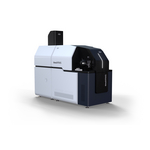
This acquisition further enhances Bruker’s solutions for CCS-enabled 4D-Proteomics™ by adding fast, scalable and GPU-based search engine capabilities for faster data processing and full utilization of molecular collision cross sections (CCS). Benefits include greater data completeness and higher confidence in protein and PTM identification and quantification in unbiased ‘shot-gun’ proteomics. Bruker’s novel timsTOF mass spectrometry systems with >120 Hz duty cycle in PASEF mode are uniquely suitable for real-time search by GPU-enabled, parallel operations on multiple threads.
“Partnering with the IP2 team and the Yates Lab provides an excellent opportunity to enhance Bruker’s bioinformatics capabilities in support of 4D-Proteomics™,” said Dr. Rohan A. Thakur, Bruker’s Executive Vice President for Life Science Mass Spectrometry. “High-throughput proteomics requires unprecedented search engine performance, including the need for low false discovery rates with very large datasets. This will benefit the proteomics research and translational medical community. We are also pleased to announce the establishment of Bruker’s bioinformatics team focused on protein and data science based in San Diego, California, headed by Robin Park who joined Bruker as part of the IP2 asset acquisition. Robin will continue to work closely with the Yates Lab in his new role with Bruker, as well as with other Bruker open proteomics software partners and collaborators.”
“We are very pleased to partner with Bruker in enabling a CCS-aware bioinformatics platform,” added Professor John Yates III, the Ernest W. Hahn Professor at The Scripps Research Institute in La Jolla, California. “Innovative software tools are a necessity to address unanswered biological questions with mass spectrometry. The trapped ion mobility functionality and the robustness of the timsTOF Pro offer unique bottom-up proteomics capabilities that can be effectively used to study many diseases. For example, a current focus of our research is to further our understanding of proteins involved with brain disorders, such as Alzheimer’s Disease (AD) and Autism Spectrum Disorders (ASD).”
“The timsTOF has ushered in the era of fast nano-LC, making greater than fifty 4D-Proteomics™ runs per day per instrument routine, but pushing the bottleneck downstream to data analysis,” said Dr. Gary Kruppa, Bruker’s Vice President for Proteomics. “The unique IP2 GPU search engine, with its capability to scale with massive data quantities on large cohorts, enables ‘Run & Done’ proteomics, with results available immediately after a large dataset is acquired. Moreover, with IP2 we expect to enable a new paradigm where timsTOF acquisition takes search results as feedback in real time to focus on proteins of interest for even more complete quantitative results. Finally, IP2 offers an optional gateway for our other proteomics software partners to accelerate their time-to-results.”
About Bruker Corporation (Nasdaq: BRKR)
Bruker is enabling scientists to make breakthrough discoveries and develop new applications that improve the quality of human life. Bruker’s high-performance scientific instruments and high-value analytical and diagnostic solutions enable scientists to explore life and materials at molecular, cellular and microscopic levels. In close cooperation with our customers, Bruker is enabling innovation, improved productivity and customer success in life science molecular research, in applied and pharma applications, in microscopy and nanoanalysis, and in industrial applications, as well as in cell biology, preclinical imaging, clinical phenomics and proteomics research and clinical microbiology. For more information, please visit: www.bruker.com.
About the Yates Lab at TSRI (La Jolla, CA)
Research in the Yates lab is focused on the development and application of mass spectrometry-based proteomics techniques to a wide range of biological questions. Our lab has been instrumental in the evolution of the field to its current status, having pioneered many of the landmark advances that form the basis for prevailing proteomics practices, including shotgun proteomics (McCormack, A. L.; Schieltz, D. M.; Goode, B.; Yang, S.; Barnes, G.; Drubin, D.; Yates, J. R., III. Anal. Chem. 1997, 69, 767−776), database searching (SEQUEST, Eng, J. K.; McCormack, A. L.; Yates, J. R., III. J. Am. Soc. Mass Spectrom. 1994, 5, 976−989), and Multidimensional Protein Identification (MudPIT, Washburn, M. P.; Wolters, D.; Yates, J. R., III. Nat. Biotechnol. 2001, 19, 242−247). We continue the drive to increase the scope, sensitivity and throughput of proteomics technologies and their application to biological questions. Our research encompasses the areas of bioinformatics and software development, methods development and biological applications. The integration of all the elements in the proteomics pipeline within one lab facilitates advances in all of them. The Yates lab has published more than 700 peer reviewed papers. Recent highlights include comprehensive proteomics studies revealing molecular mechanisms implicated in Cystic Fibrosis as well as identification of proteins capable of restoring function to mutated proteins in the disease, and investigations into affective disorders of the brain, including schizophrenia and depression. http://fields.scripps.edu/yates/wp/
Contacts
Investor Contact:
Miroslava Minkova
Bruker Director, Investor Relations & Corporate Development
T: +1 (978) 663-3660 x1479
E: Investor.Relations@bruker.com
Media Contact:
Dr. Petra Scheffer
Bruker Daltonics
Marketing & Communications
T: +49 (421) 2205-2843
E: petra.scheffer@bruker.com