
Agilent Unveils the 9500 ICP-MS: Redefining Trace Element Analysis
Agilent Unveils the 9500 ICP-MS: Redefining Trace Element Analysis
Next-generation ICP-MS/MS delivers faster measurements, simplified workflows, and easier access to advanced elemental analysis
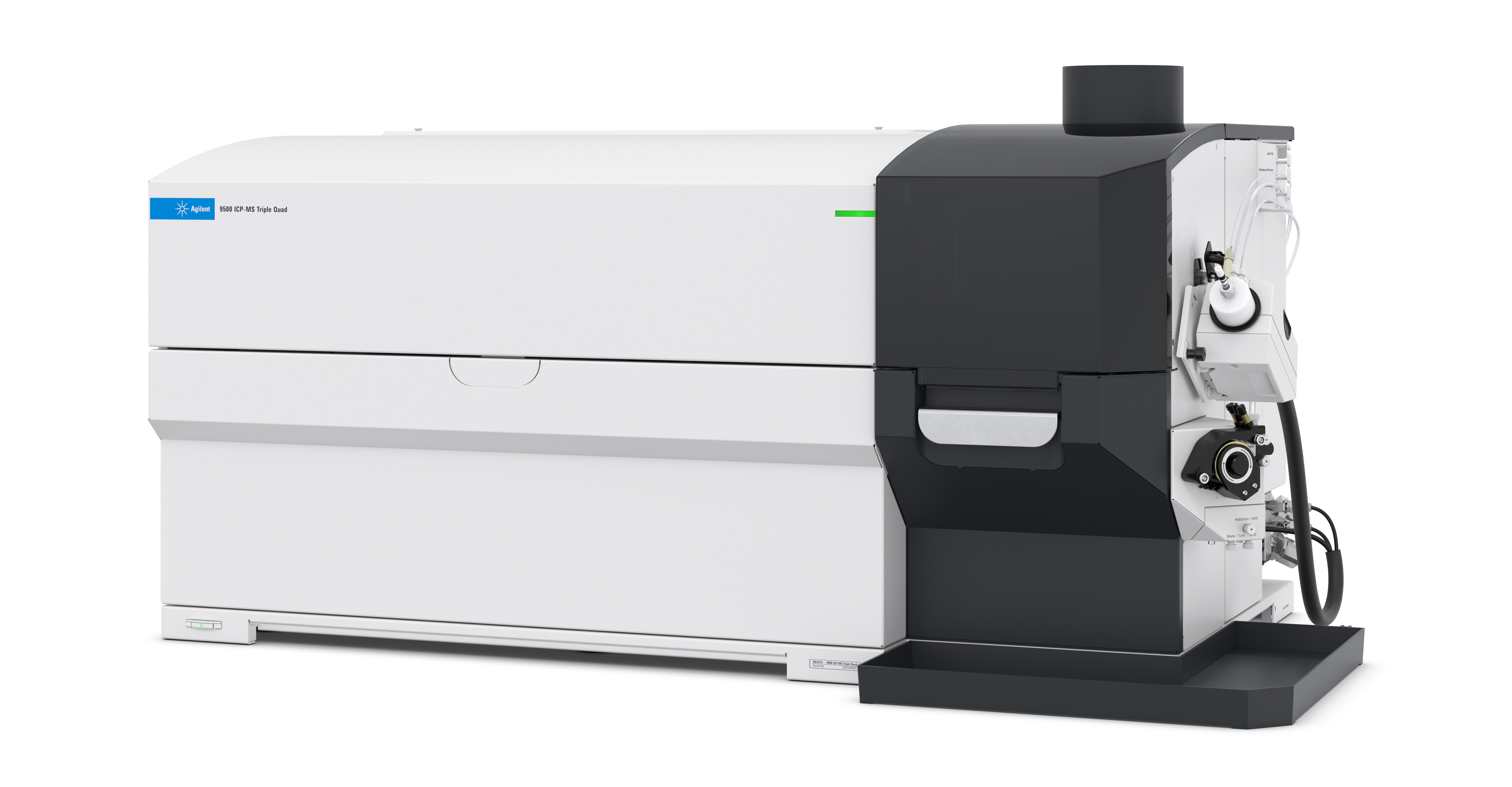
SANTA CLARA, Calif.--(BUSINESS WIRE)--Agilent Technologies Inc. (NYSE: A) today announced the launch of the Agilent 9500 Triple Quadrupole ICP-MS, a next-generation inductively coupled plasma mass spectrometry system designed to help single quadrupole ICP-MS laboratories more easily transition to triple quadrupole technology for advanced trace elemental analysis.
As testing demands grow more complex and skilled resources remain limited, laboratories face increasing pressure to deliver faster, interference-free results without adding operational burden. The Agilent 9500 ICP-MS addresses these challenges by improving productivity, simplifying advanced interference removal, and enabling laboratories to generate high-quality data with greater confidence.
The system introduces innovations including Air Cell and Advanced Helium Mode (AHM), enabled by Agilent's proprietary Dual-Cell System (DCS). Together with intelligent OpenLab ICP-MS software, these capabilities help redefine traditional single quadrupole workflows that support faster data acquisition, reduced rework, and easier adoption of triple quadrupole ICP-MS technology for both routine and advanced applications.
“With the Agilent 9500, we are fundamentally changing how laboratories adopt and use triple quadrupole ICP-MS,” said Geoff Winkett, vice president and general manager of Agilent’s Spectroscopy and Vacuum Division. “By making advanced capability straightforward and easily accessible, the 9500 enables customers to migrate their existing single quadrupole methods while benefiting from improved productivity, lower cost of ownership, and the highest data quality.”
The Agilent 9500 ICP-MS delivers a typical reduction of more than 33% in acquisition time, helping laboratories increase sample throughput and reduce the analysis cost per sample. Advanced interference removal—including the ability to use ambient laboratory air for triple quadrupole reactions—reduces complexity and minimizes reliance on oxygen cylinders, supporting more efficient and sustainable laboratory operations.
Built on established Agilent workflows, the system is supported by OpenLab ICP-MS software enabling straightforward and confident adoption of triple quadrupole technology. Routine users can transition more easily from single quadrupole systems with minimal disruption, while laboratories gain the analytical depth needed to address increasingly complex sample matrices.
“From a customer perspective, the 9500 changes what’s possible with ICP-MS,” Winkett added. “It delivers the confidence and performance of triple quadrupole analysis in workflows that feel familiar and intuitive, helping laboratories reduce complexity and take on more demanding applications without disruption.”
The Agilent 9500 ICP-MS is designed for use in environmental, food, pharma, fine and specialty chemical, advanced materials, and contract testing laboratories. By enhancing interference removal, sensitivity, and productivity, the system helps laboratories reduce reruns, improve confidence in reported results, and manage growing workloads under cost and resource constraints.
The launch reflects a broader shift in the analytical instrumentation market toward advanced technologies that are easier to implement and more practical for routine testing environments.
About Agilent Technologies
Agilent Technologies, Inc. (NYSE: A) is a global leader in analytical and clinical laboratory technologies, delivering insights and innovation that help our customers bring great science to life. Agilent’s full range of solutions includes instruments, software, services, and expertise that provide trusted answers to our customers' most challenging questions. The company generated revenue of $6.95 billion in fiscal year 2025 and employs approximately 18,000 people worldwide. Information about Agilent is available at www.agilent.com. To receive the latest Agilent news, subscribe to the Agilent Newsroom. Follow Agilent on LinkedIn and Facebook.
Contacts
Media Contact
Kate Coyle
Agilent Technologies Inc.
+1 302-633-7490
kate.coyle@agilent.com